A damp crawl space is easy to ignore because you rarely spend time there.
The trouble is, your crawl space affects the rest of the house every day. Moisture below the floor doesn’t always stay below the floor. It can work its way into the air you breathe, damage wood over time, and make the floors above feel colder than they should.
That’s why crawl space moisture problems in Southeast Michigan deserve attention before they become larger and more expensive to deal with.
We’ve looked at crawl spaces with nothing more than a little condensation on the ductwork. We’ve also seen spaces where years of excess moisture led to mold, wood rot, sagging floors, and insulation that no longer did its job.
The good news is that most moisture problems can be addressed once the source is identified. The right solution depends on what’s happening in the crawl space, not on a one-size-fits-all product.
Why Crawl Spaces Stay Damp In Southeast Michigan
Michigan’s climate gives crawl spaces several opportunities to collect moisture throughout the year.
Spring rain, melting snow, humid summers, and freeze-thaw cycles during winter all affect the ground around the foundation. Many Michigan homes also sit on clay soil, which doesn’t always drain water quickly. When water collects around the foundation, it increases the chance of water seepage and ground moisture finding its way into the crawl space.
Some homes also have older crawl space vents that were intended to dry the space by allowing outside air to circulate. In many cases, those vents do the opposite. Warm, humid air enters the crawl space, meets cooler surfaces, and condensation forms.
The result is a damp space that stays humid longer than it should.
Common Signs Of Crawl Space Moisture Problems
You don’t always have to crawl under the house to recognize crawl space issues.
Some of the first clues appear inside the home.
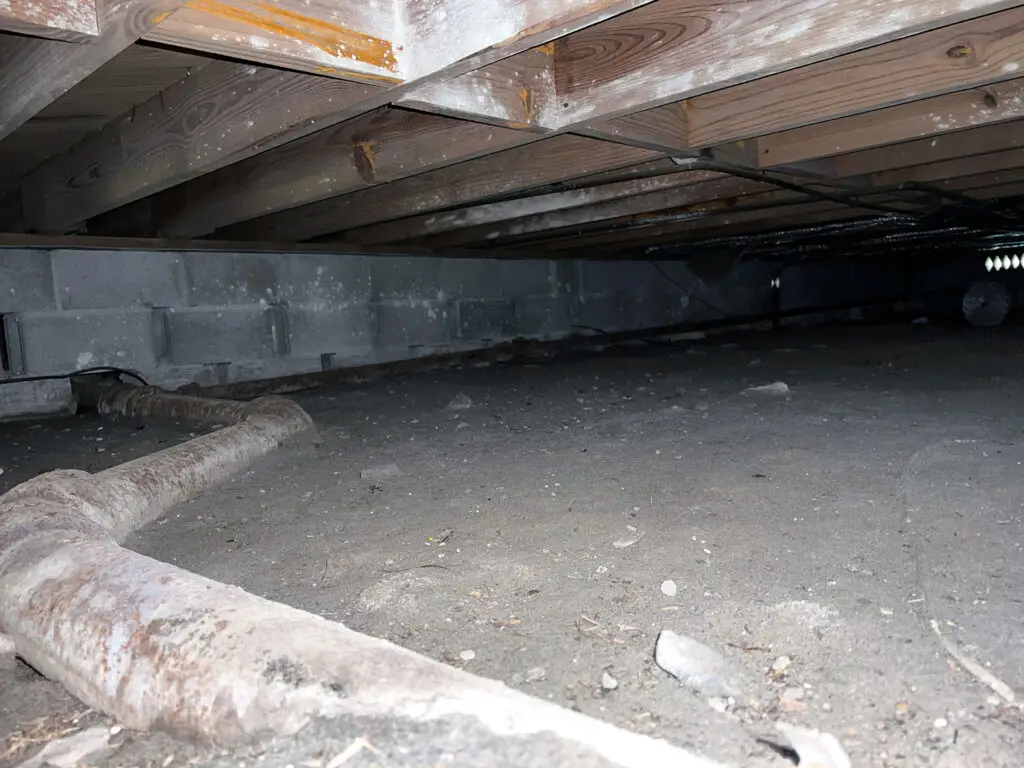
We’ve had homeowners call because the house suddenly felt more humid, the floors stayed cold during the winter, or there was a musty odor they couldn’t seem to get rid of. By the time we look underneath, we often find wet insulation hanging below the floor joists, standing water after heavy rain, or moisture that’s been there much longer than anyone realized.
Other signs worth paying attention to include:
- Uneven floors or soft spots while walking
- Visible mold around wood framing
- Increased pest infestations or signs of rodents
Each of these signs points toward a moisture problem that deserves an inspection before it causes additional moisture damage.
Why Crawl Spaces Collect Moisture
Many homeowners assume a plumbing leak is responsible.
Sometimes that’s true.
More often, several smaller issues combine to create the ideal environment for moisture.
Ground moisture naturally evaporates from exposed soil. Without a properly installed vapor barrier, that moisture continues rising into the crawl space every day.
Heavy rain can also contribute if grading directs water toward the foundation instead of away from it. Gutters that overflow near the house or downspouts that discharge too close to the foundation can add even more water around the structure.
Relative humidity is another factor.
Once relative humidity climbs above roughly 60 percent, conditions become much more favorable for mold growth. The combination of humid air, cool surfaces, and organic materials like wood framing creates an environment where mold spores can settle and spread.
Why Moisture Doesn’t Stay In The Crawl Space
A crawl space isn’t isolated from the rest of the home.
Air naturally moves upward through the house. As that air rises, it can carry humidity, musty odors, and mold spores into the living areas above.
That’s one reason crawl space problems often affect indoor air quality throughout the home.
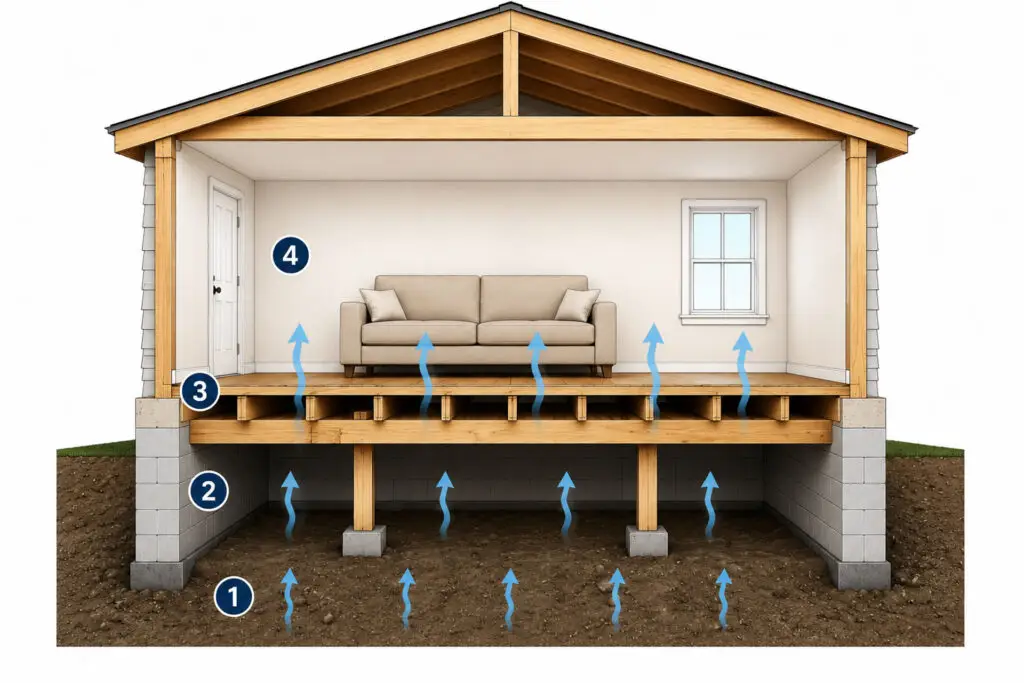
- Moisture evaporates from exposed soil.
- Humid air fills the crawl space.
- Air naturally moves upward into the home.
- Moisture affects insulation, air quality, and floors.
Moisture can also reduce insulation performance. Wet insulation doesn’t provide the same thermal resistance as dry insulation, making it harder to maintain a consistent indoor temperature and reducing overall energy efficiency.
If floor joists remain damp for long periods, wood rot becomes more likely. Left alone long enough, moisture can eventually affect the structural integrity of portions of the floor system.
The Right Solution Depends On The Crawl Space
Every crawl space is different.
One home may only need better moisture control and replacement crawl space insulation.
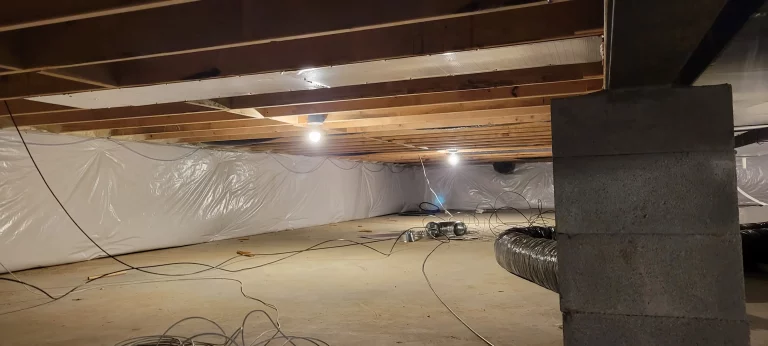
Another may benefit from crawl space encapsulation because moisture is entering from the ground across the entire space.
A crawl space inspection helps identify the actual problem areas before deciding which solutions make sense.
Depending on what we find, recommendations may include:
- Installing or replacing a heavy-duty vapor barrier to reduce ground moisture.
- Replacing damaged crawl space insulation after the moisture source has been corrected.
- Closing crawl space vents when they’re contributing to excess humidity.
- Extending gutters and downspouts farther from the house.
- Recommending a sump pump or french drain when water intrusion is present as part of an overall moisture management plan completed by the appropriate contractor.
- Recommending crawl space encapsulation when conditions throughout the crawl space call for a long-term moisture control system.
The goal isn’t just to dry out the crawl space temporarily. It’s to create a crawlspace system that controls moisture year round and protects the insulation installed beneath the floors.
Crawl Space Encapsulation Isn’t Always The First Answer
People sometimes assume every damp crawl space needs encapsulation.
We’ve recommended encapsulation on some homes.
On others, it wasn’t necessary.
If the primary issue is damaged insulation, a missing vapor barrier, or small air leaks, those problems may be addressed without fully encapsulating the crawl space.
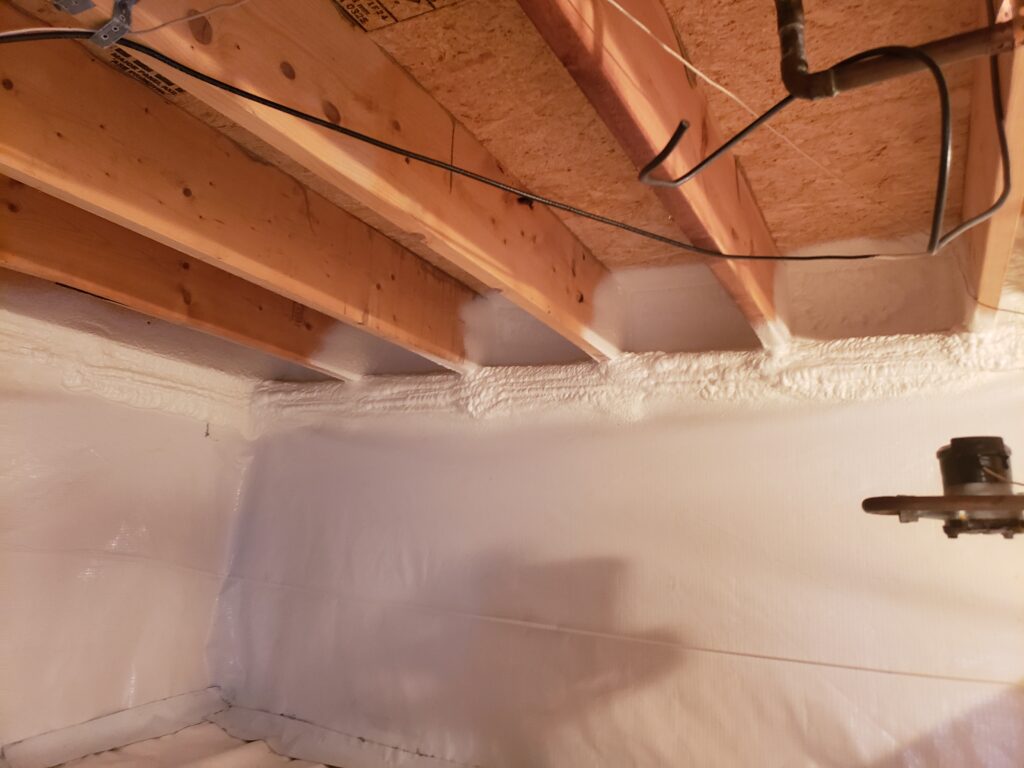
When crawl space encapsulation is the right fit, it usually involves more than laying plastic across the ground. A complete crawlspace encapsulation system often includes a heavy-duty vapor barrier installation across the ground and foundation walls, sealing penetrations, controlling humidity, and making sure moisture isn’t simply trapped inside.
The objective is to reduce ground moisture, improve air quality, and create a cleaner, drier crawlspace that better supports the insulation above it.
Don’t Forget The Insulation
Moisture and insulation go hand in hand.
Even the best insulation loses effectiveness when it stays wet.
We’ve removed fiberglass insulation that had fallen away from the floor joists after absorbing moisture for years. We’ve also found insulation that looked fine from a distance but had become compressed enough that it no longer provided much thermal resistance.
Once the moisture source has been addressed, replacing damaged insulation helps restore comfort and improves the performance of the floor system.
Depending on the crawl space, that could involve fiberglass batts, spray foam insulation in selected areas, or another insulation approach that fits the building.
The material isn’t the first decision.
The condition of the crawl space is.
Should You Install A Dehumidifier?
Sometimes.
A dehumidifier can help control humidity inside a crawl space, particularly after moisture sources have been corrected. It works best as part of a larger moisture-control strategy rather than as the only solution.
For example, a dehumidifier won’t stop water seepage, standing water, or ground moisture from entering through exposed soil. It also won’t correct drainage issues outside the foundation.
Think of it as one part of a complete system instead of the entire solution.
Does Homeowners Insurance Cover Crawl Space Moisture Damage?
It depends. Many homeowners insurance policies may cover sudden and accidental water events under certain circumstances, but long-term moisture problems, condensation, ground moisture, or gradual deterioration often aren’t covered.
How Much Does Crawl Space Repair Cost?
Simple question, not so simple answer.
A crawl space that only needs a new vapor barrier installation will have a very different scope than one with standing water, damaged insulation, high humidity, and multiple moisture problems.
The size of the crawl space, accessibility, existing conditions, and the solutions required all affect the final cost.
That’s why an inspection comes first.
Looking at the crawl space provides a much more accurate recommendation than estimating from square footage alone.
Can Moisture Affect Your Home’s Value?
Yes.
A damp crawl space often becomes part of the conversation during a home inspection.
Visible mold, musty odors, damaged insulation, standing water, or sagging floors can raise questions for buyers and sometimes lead to additional inspections before a sale moves forward.
On the other hand, a dry crawl space with documented crawl space encapsulation or other moisture-control improvements may make buyers more comfortable because they can see the issue has already been addressed.
Moisture doesn’t automatically lower a home’s value, but ignoring crawl space issues usually doesn’t make them disappear either.
Small Problems Usually Stay Small Only For A While
Most crawl space problems don’t begin with major structural damage.
They usually begin with moisture.
A little condensation.
A missing vapor barrier.
Water collecting after a heavy rain.
Humidity that never seems to leave.
Left alone, those small issues can lead to mold, wood rot, damaged insulation, poor air quality, and comfort problems throughout the house.
The goal isn’t to recommend more work than you need.
Every crawl space is a little different.
If you’ve noticed cold floors, musty odors, visible moisture, or other signs that something isn’t right below your home, a crawl space inspection can identify where the moisture is coming from and what solutions make sense for your particular building. The first step is understanding where the moisture is coming from so you can fix the problem instead of just treating the symptoms.
Contact Colony Insulation to schedule a crawl space inspection in Southeast Michigan.