Most people assume they need more insulation because the house feels cold in January or too warm by late summer.
Sometimes they’re right.
Sometimes we find something else first.
We’ve climbed into attics where plenty of insulation still covered the floor, but warm air was pouring through recessed lights, plumbing penetrations, wiring holes, and other small openings.
That’s the difference between air sealing and insulation.
Air sealing controls air movement.
Insulation controls heat transfer.
Most homes across Southeast Michigan need both.
We Start By Looking For Air Leaks
When we walk into a house, we aren’t trying to guess which insulation product belongs there.
We’re trying to figure out where the house is leaking.
Sometimes that’s obvious.
Other times it’s dozens of small openings scattered throughout the building.
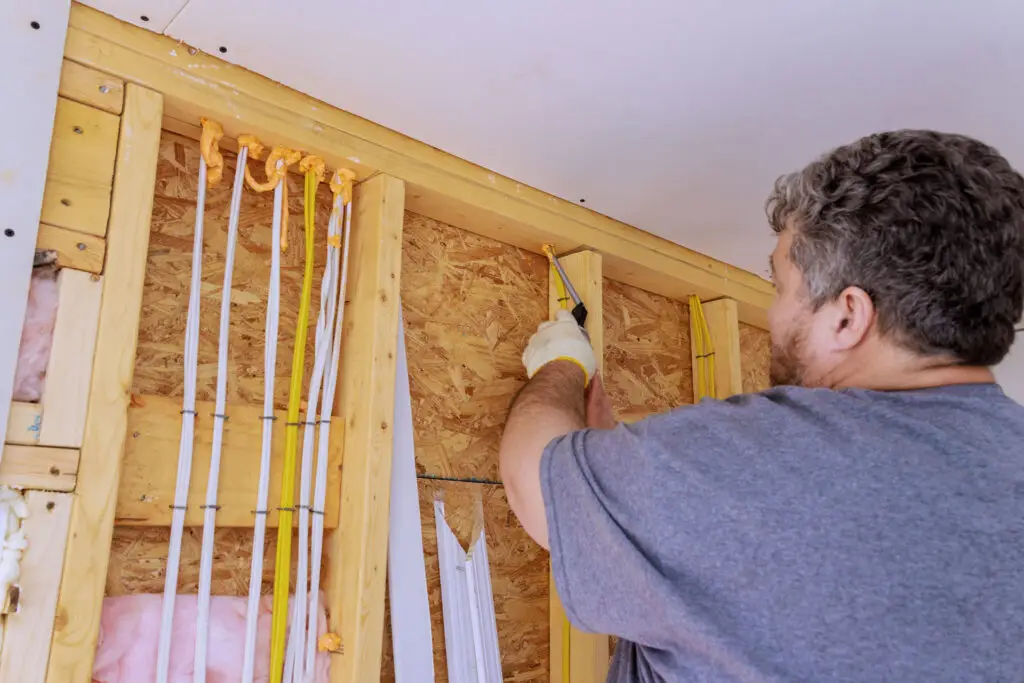
Recessed lights. Plumbing penetrations. Electrical penetrations. The attic hatch. Rim joists. Even small gaps in exterior walls or around the crawl space can let conditioned air escape while the house pulls cold air back inside.
While none of those openings looks very important by itself, together, they have a noticeable effect on comfort, cooling costs, and winter heating bills.
That’s why we look at air sealing and insulation as one system instead of two separate projects. Air sealing closes those gaps in the building’s air barrier before we think about adding more insulation.
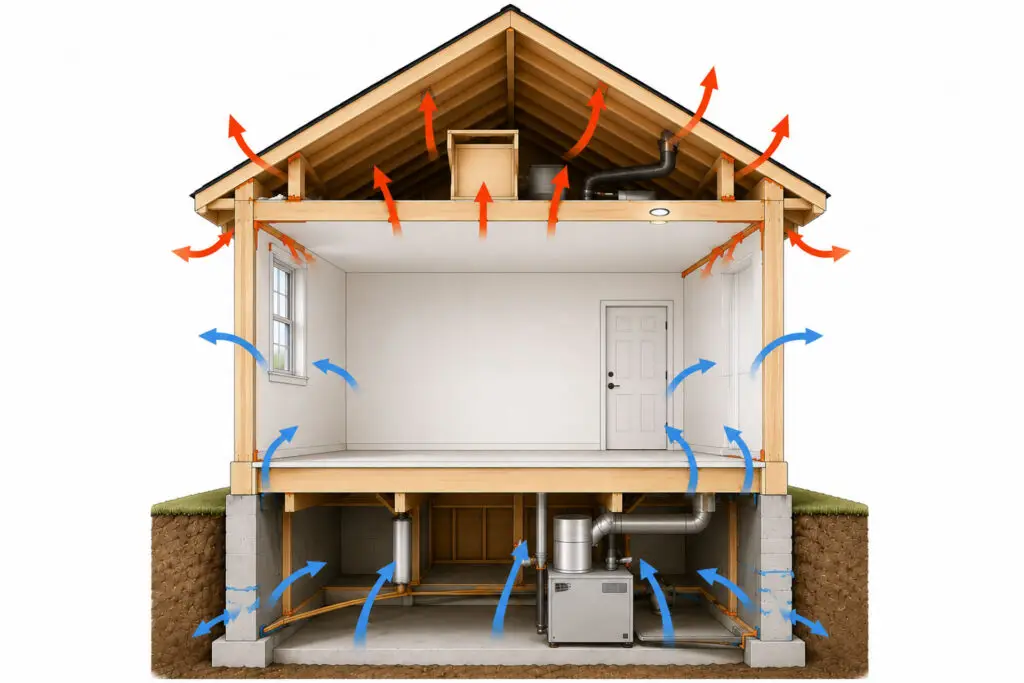
During winter, warm air naturally rises toward the attic. Once it finds a path out of the house, the lower levels begin to pull air through every available opening because of the pressure difference. Building scientists call this the stack effect.
Most homeowners never see that happening. But they feel it.
- Cold floors
- Drafty rooms
- Uneven temperatures
- High heating bills
- One room that’s always colder than the rest
Those symptoms usually tell us the house has air leaks somewhere.
Why More Insulation Isn’t Always The First Step
Think about wearing a heavy winter coat with the zipper open.
The coat has insulation, but warm air keeps escaping. You’ll never be warm no matter how thick the coat is.
Adding insulation to a leaky house works much the same way.
Insulation slows heat flow through ceilings, walls, and floors. It doesn’t stop uncontrolled airflow.
That’s why we generally recommend air sealing before adding insulation.
Once the air leaks have been reduced, insulation can do the job it was designed to do.
That doesn’t mean every project requires spray foam.
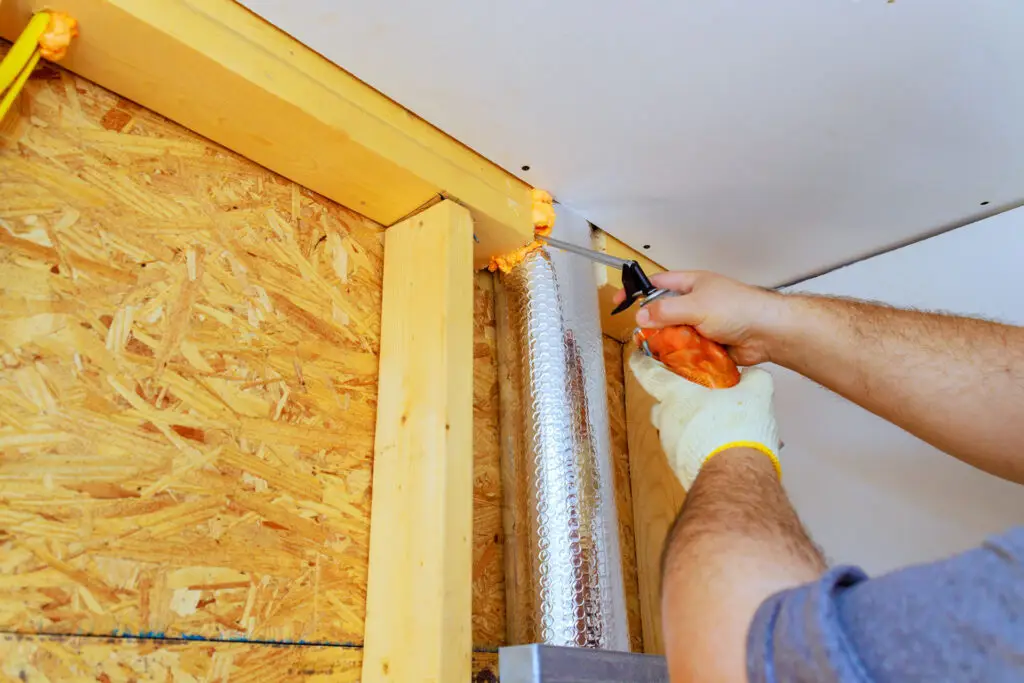
Sometimes air sealing work involves caulk, weather stripping, rigid foam, or two-part spray foam around specific openings. Sometimes blown-in insulation is the next logical step. Other homes benefit from fiberglass batts, dense-packed cellulose, or mineral wool depending on the area being insulated.
The building usually tells us which insulation work makes the most sense.
Not the other way around.
Air Sealing And Insulation Do Different Things
One thing that surprises homeowners is how often we finish an inspection without recommending the product they expected.
Someone may call asking about spray foam insulation.
After looking through the attic, we recommend air sealing and blown-in insulation instead.
Another house already has enough insulation. The real problem is the amount of air leaking through recessed lights, plumbing penetrations, or the attic hatch.
Air sealing controls where the air moves.
Insulation slows how quickly heat moves through the building.
Most houses need both.
The Blower Door Test
We’ve had homeowners point to a bedroom that felt cold all winter.
They were convinced the wall insulation had failed.
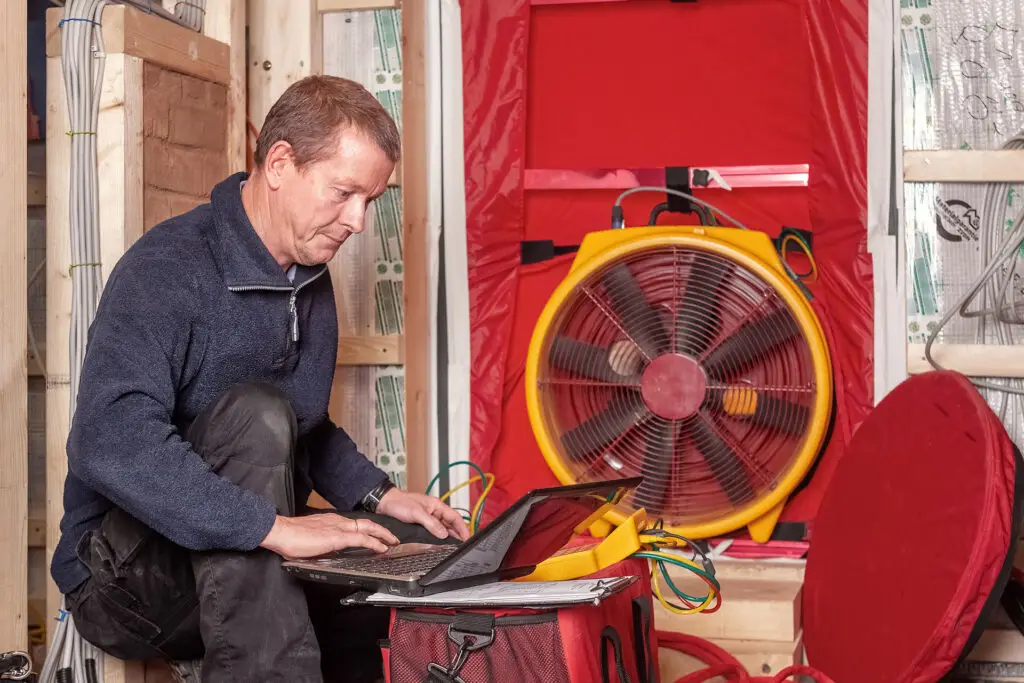
After running a blower door test, the largest air leakage wasn’t in that wall at all. It was escaping through the attic on the opposite side of the house.
That’s when we usually set up the blower door.
The test exaggerates the leaks enough that they become much easier to find. Sometimes the biggest leak is exactly where we expected. Sometimes it’s somewhere completely different.
We often use thermal imaging at the same time to confirm what we’re seeing.
Once the air sealing work is finished, we run the blower door again to measure how much the air leakage changed.
That’s especially valuable before investing in larger insulation upgrades because it helps prioritize the work that will have the biggest impact on comfort, energy savings, and energy efficiency.
Not Every House Needs Spray Foam
Spray foam gets a lot of attention, and for good reason.
It combines insulation with air sealing, making it an excellent choice in the right places. Rim joists, rooflines, cantilevers, and other hard-to-reach areas often benefit because the foam insulation seals gaps while adding thermal resistance.
That doesn’t mean it’s automatically the best solution for every project.
We’ve been in attics where spray foam would have added cost without solving a bigger problem. Once the major air leaks were sealed, blown-in cellulose insulation delivered exactly what the homeowner needed. In other houses, fiberglass made sense because the framing, budget, and performance goals all lined up.
New construction can be different because every cavity is open and accessible before drywall is installed, making it easier to build a more energy efficient home from the beginning.
That’s why we look at the building before recommending a material.
The goal isn’t to install more spray foam.
The goal is to solve the problem in the most practical and cost-effective way.
A Few Things Homeowners Ask Us During Estimates
They usually come up after we’ve walked through the attic or crawl space and pointed out where the house is leaking. Once homeowners can see how much air is moving through the building, the conversation shifts from insulation products to how the house actually performs.
Is Air Sealing More Important Than R-Value?
This usually comes up after we’ve found several air leaks.
R-value tells us how well insulation slows heat flow. Air sealing controls air movement.
If warm air is escaping through dozens of small openings, adding insulation alone won’t solve the problem. Once we seal leaks, the insulation has a much better chance of maintaining consistent temperatures, improving energy efficiency, and helping reduce lower energy bills over time.
Why Are People Removing Spray Foam?
When spray foam is removed, it’s usually because of installation problems, the wrong product being used in a particular area, or because repairs require access to framing or roof components.
Properly installed spray foam remains an excellent option in many situations, but like every insulation material, it works best when it’s installed where it makes sense rather than everywhere.
How Much Does It Cost To Insulate A 2,000 Square Foot Attic?
Cost is usually the next question.
Two attics with the same square footage can have very different estimates.
One home may only need a little air sealing and additional cellulose insulation. Another may have insulation gaps, moisture problems, ventilation concerns, or years of air leakage that need attention before new insulation is added.
Accessibility, the condition of the existing insulation, and the amount of air sealing all affect the final scope of work.
That’s why an inspection almost always provides a more accurate answer than square footage by itself. Our guide to attic insulation cost in Southeast Michigan explains more about what affects pricing.
Do Mice Like Blown-In Insulation?
We hear this one more than you’d think.
Mice aren’t attracted to blown-in insulation itself. They’re simply looking for shelter and a way to get air inside the house from openings around the exterior.
Closing gaps around the building envelope is usually much more effective than replacing insulation alone. Once those entry points are sealed, the insulation can continue doing the job it was installed to do.
Better Comfort Starts With Understanding The House
Most homeowners call because they’re dealing with a symptom.
- Cold floors.
- Drafty rooms.
- High energy bills.
- A second floor that never seems comfortable.
Those symptoms don’t automatically tell us what the house needs.
We’ve seen homes where adding attic insulation was the right answer.
Other homes were pulling enough air through the rim joists or crawl space to affect the entire first floor. We’ve even walked into houses where the existing fiberglass was doing its job, but uncontrolled air leakage was making the home feel uncomfortable anyway.
The goal is always the same: reduce unnecessary energy loss, improve indoor air quality by limiting unwanted outdoor air, and help maintain more consistent temperatures throughout the house.
Proper ventilation and fresh air intake still have an important place.
That’s why we don’t start by recommending a particular insulation product.
We start by looking at how the house is performing.
Once we’ve identified where conditioned air is escaping, where heat loss is occurring, and which areas are creating comfort problems, the recommendation usually becomes much more straightforward.
One house may need spray foam around the rim joists.
Another may only need cellulose after the attic is properly air sealed.
We’ve also finished inspections where the existing insulation stayed exactly where it was because air sealing closed enough leaks to stop air movement through the house.
Every house is a little different.
That’s why we don’t start with a favorite insulation product.
We start with the building.
Once we understand how it’s performing, the right recommendation usually becomes obvious.
Contact Colony Insulation to schedule an insulation assessment in Southeast Michigan.