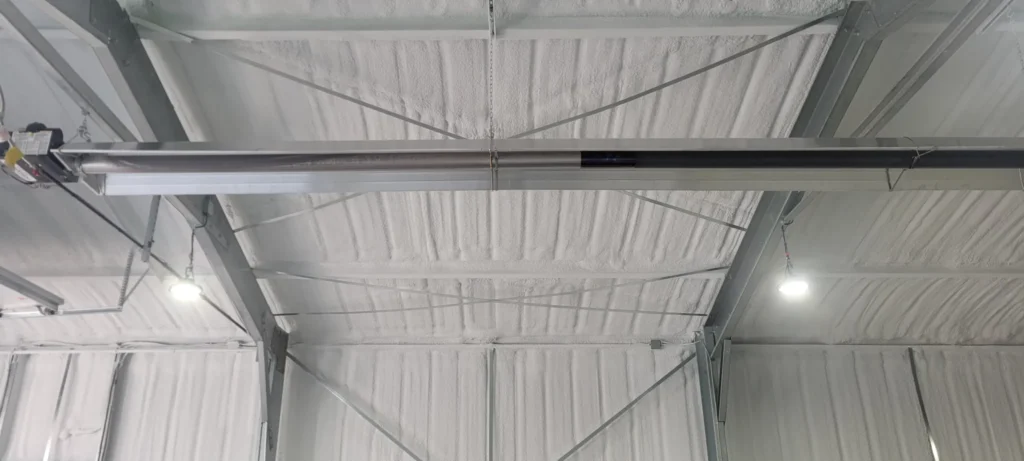
Spray foam insulation reduces energy bills by creating an airtight thermal barrier that helps prevent conditioned air from escaping and outdoor air from getting into your home. Unlike fiberglass or cellulose alone, spray foam expands to fill gaps, cracks, and irregular spaces, which helps reduce the air leaks that cause wasted heating and cooling.
The effectiveness comes from spray foam’s dual function as both insulation and air barrier. Traditional insulation materials may require separate air sealing steps, but spray foam can help address both at the same time when it is installed correctly. The biggest gains are usually seen in older buildings, drafty homes, attics, crawl spaces, rim joists, and other areas where poor air sealing lets energy escape.
Understanding Spray Foam’s Energy-Saving Mechanisms
Spray foam insulation works through several energy-saving mechanisms that help reduce utility expenses. The material’s cellular structure traps air within tiny bubbles, creating thermal resistance. When applied, the foam expands to help cover the application area and seal small openings that standard insulation can miss.
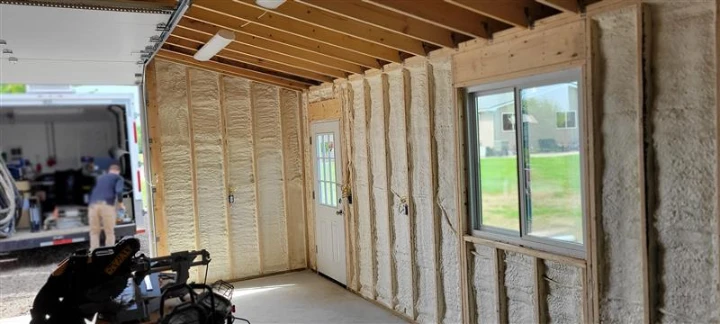
The primary energy savings come from reducing air leakage. Gaps around electrical outlets, plumbing penetrations, framing joints, rim joists, attic transitions, and crawl space walls can all let conditioned air move in and out of the building. Spray foam bonds to many building materials and helps seal those weak points.
Tip: Target areas like rim joists, attic penetrations, and crawl space walls for the biggest energy-saving impact. These locations often have high air leakage rates and can provide a strong return on insulation work.
Types of Spray Foam and Their Energy Performance
| Foam Type | R-Value Per Inch | Air Barrier Properties | Vapor Barrier | Best Applications |
|---|---|---|---|---|
| Open-cell | 3.6–4.0 | Moderate | No | Interior walls, attics |
| Closed-cell | 6.0–7.0 | Excellent | Yes | Exterior walls, basements, rim joists |
| Medium-density | 4.5–5.0 | Good | Partial | Mixed applications |
Closed-cell spray foam delivers strong energy performance because it has a higher R-value per inch and provides excellent air sealing. Open-cell foam costs less and can work well in the right areas, but it may not be the right fit for every moisture or vapor-control situation. The choice between spray foam types should depend on the building, the application area, and the performance goal.
What Affects Actual Energy Savings?
Energy savings from spray foam insulation vary based on the building, climate zone, existing insulation levels, air leakage, and HVAC system performance. A newer home with decent insulation may see a smaller percentage improvement than an older home with gaps, drafts, and weak attic coverage. The more uncontrolled air movement a building has, the more valuable air sealing becomes.
Michigan homes often benefit from insulation upgrades because the building has to deal with cold winters, humid summers, and major temperature swings. Spray foam can help reduce heating loss in winter and slow heat gain in summer, especially when it is used in the right parts of the structure.
Tip: Track your utility bills for a full year after installation to compare energy use across similar seasons. Most property owners notice comfort improvements before they have a full year of billing data.
Performance Compared With Traditional Insulation
| Insulation Type | Air Sealing Effectiveness | R-Value Retention | Installation Gaps | Energy Loss Prevention |
|---|---|---|---|---|
| Spray Foam | Excellent | Maintains full value | Minimal when installed correctly | Strong |
| Fiberglass Batts | Limited without air sealing | Can reduce over time if compressed or poorly fitted | Common around framing and penetrations | Moderate |
| Blown Cellulose | Good coverage in open spaces | Can settle over time | Moderate | Good in the right application |
| Rigid Foam Boards | Moderate | Maintains value | Common at seams | Good when detailed correctly |
Spray foam often outperforms traditional insulation when the real problem is uncontrolled air movement. While initial installation costs may be higher than some other materials, the improved air sealing and comfort benefits can make it a strong option in the right areas.
Things to Consider Before Making a Decision
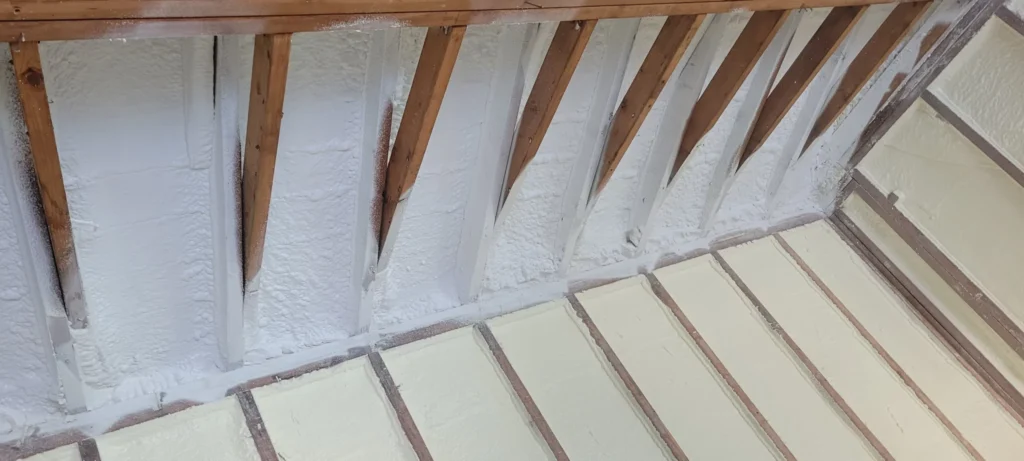
Several factors influence whether spray foam insulation is the right energy-saving option for your home or building. Building age, existing insulation levels, moisture conditions, ventilation, and HVAC efficiency all affect the recommendation. A house with poor air sealing and old attic insulation may need a different plan than a newer home with targeted rim joist or crawl space issues.
Climate also matters. Northern climates often benefit from closed-cell foam in applications where higher R-value and moisture resistance are important. Other areas may be better suited for open-cell foam, blown-in insulation, fiberglass, or a combination of products. The right insulation plan should match the structure instead of forcing one material everywhere.
Professional installation quality directly affects performance. Poor prep, missed areas, bad coverage, or the wrong material in the wrong place can reduce the benefit of the project. Work with an insulation contractor that can explain where spray foam makes sense and where another insulation type may be a better fit.
Tip: Ask whether air sealing, attic ventilation, crawl space moisture, and existing insulation conditions should be addressed before new insulation is installed.
Colony Insulation’s Spray Foam and Insulation Services
Colony Insulation provides insulation services for residential and commercial properties that need better comfort, lower energy waste, and stronger air sealing. Depending on the building, that may include spray foam, attic insulation, crawl space insulation, blown-in insulation, air sealing, or commercial insulation work.
- Spray foam insulation for targeted air sealing and thermal performance
- Attic insulation for homes losing energy through the top of the building
- Crawl space insulation for cold floors, moisture concerns, and air leakage
- Blown-in insulation for open attic spaces and broader coverage needs
- Commercial insulation for buildings, facilities, and contractor-led projects
Common Questions About Spray Foam Energy Savings
How quickly will I notice energy bill reductions?
Many property owners notice comfort improvements right away because rooms feel more stable and drafts are reduced. Utility bill changes become clearer after comparing similar months before and after the insulation work.
Does spray foam insulation work in all climate zones?
Spray foam can provide energy-saving benefits in many climates, but the best material and application depend on the region, the structure, and moisture conditions. In Michigan, spray foam is often useful where air sealing and thermal performance both matter.
Can spray foam insulation reduce energy bills in older buildings?
Yes. Older buildings often benefit from spray foam because they commonly have poor air sealing, missing insulation, settled materials, or gaps around attic and floor transitions. The exact savings depend on the condition of the building before the work begins.
Taking Action for Better Energy Efficiency
Spray foam insulation can help reduce energy waste by improving air sealing and slowing heat transfer. It addresses two important parts of building performance at once: insulation value and air control. That is why it can be useful in attics, crawl spaces, rim joists, walls, basements, and other problem areas.
The best results come from matching the insulation type to the building. Existing insulation, air leakage, moisture, access, budget, and long-term goals all matter. A clear assessment helps determine whether spray foam, blown-in insulation, fiberglass, or a combination of services makes the most sense.
Understanding Spray Foam Insulation Performance
What R-value should I expect from spray foam insulation?
Closed-cell spray foam commonly provides about R-6 to R-7 per inch, while open-cell foam is commonly around R-3.6 to R-4 per inch. The right R-value target depends on the application and the space available.
How long do the energy-saving benefits last?
Properly installed spray foam insulation can maintain its energy-saving properties for a long time because it bonds to the surface and resists settling. Performance still depends on correct installation and the condition of the surrounding building assembly.
Will spray foam insulation reduce my HVAC system workload?
Spray foam can reduce HVAC runtime by helping the building hold a more consistent indoor temperature. Less air leakage means the heating and cooling system does not have to fight as much uncontrolled outdoor air.
Does spray foam insulation provide benefits beyond energy savings?
Spray foam can also help reduce drafts, limit moisture movement in the right applications, reduce outside air infiltration, and improve comfort. In some spaces, it can also help reduce noise transfer.
How do I measure actual energy savings after installation?
Compare utility bills from the same months in previous years and account for major weather differences. Many utility companies provide online usage charts that make it easier to track energy trends before and after insulation work.
Get Professional Energy-Saving Insulation Help
If you are ready to reduce drafts, improve comfort, and find out whether spray foam insulation is the right fit, Colony Insulation can help. The team works on residential and commercial insulation projects and can recommend the right approach for your building.
Request an insulation assessment to schedule an insulation assessment or request a quote.