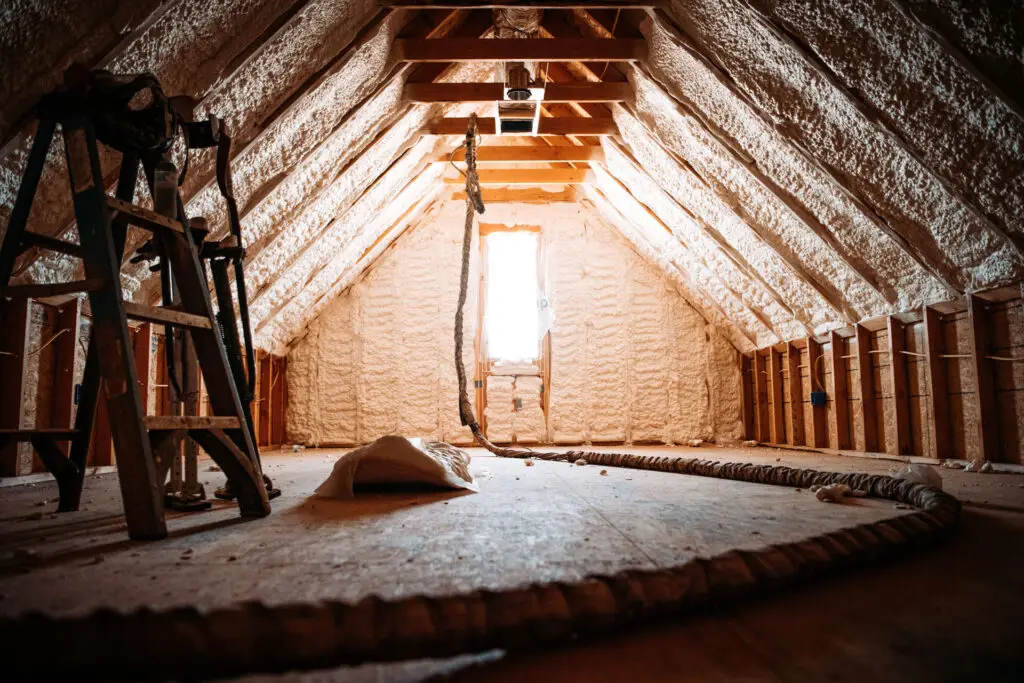
If you’re researching spray foam insulation cost in Southeast Michigan, you’re probably hoping for a simple number.
The challenge is that two projects with the same square footage can end up with very different estimates.
We’ve looked at attics that only needed a little air sealing before adding insulation. We’ve also seen newer homes where spray foam was clearly the right choice from the start. The material is only part of the equation. The building itself usually determines the cost.
Understanding what affects the estimate makes it much easier to decide whether spray foam insulation is the right investment.
Open Cell vs. Closed Cell Spray Foam
One of the first decisions is what makes the most sense, open cell foam or closed cell foam. Both products create an air seal, but they’re designed for different jobs. The better choice depends on the building, not simply the budget. During an estimate, we look at what the space needs before recommending either material.
Open Cell Spray Foam
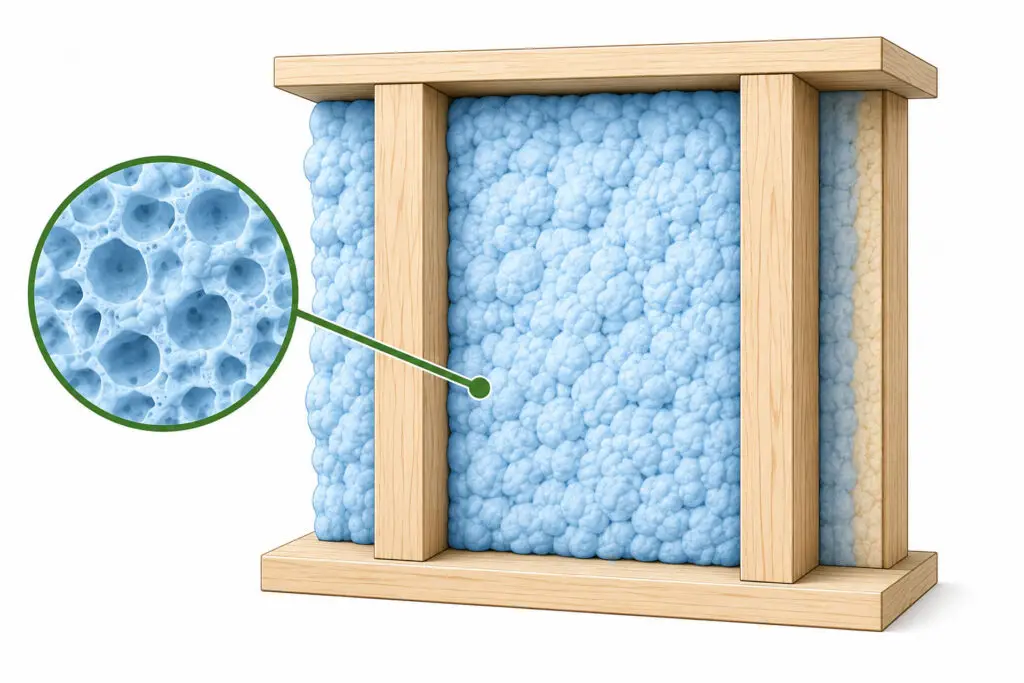
- Softer, lighter foam that expands significantly during installation
- Fills irregular framing and larger wall cavities well
- Provides some sound dampening between rooms
- Typically costs less than closed cell spray foam
- Commonly used in attics, interior walls, and other enclosed spaces
Closed Cell Spray Foam
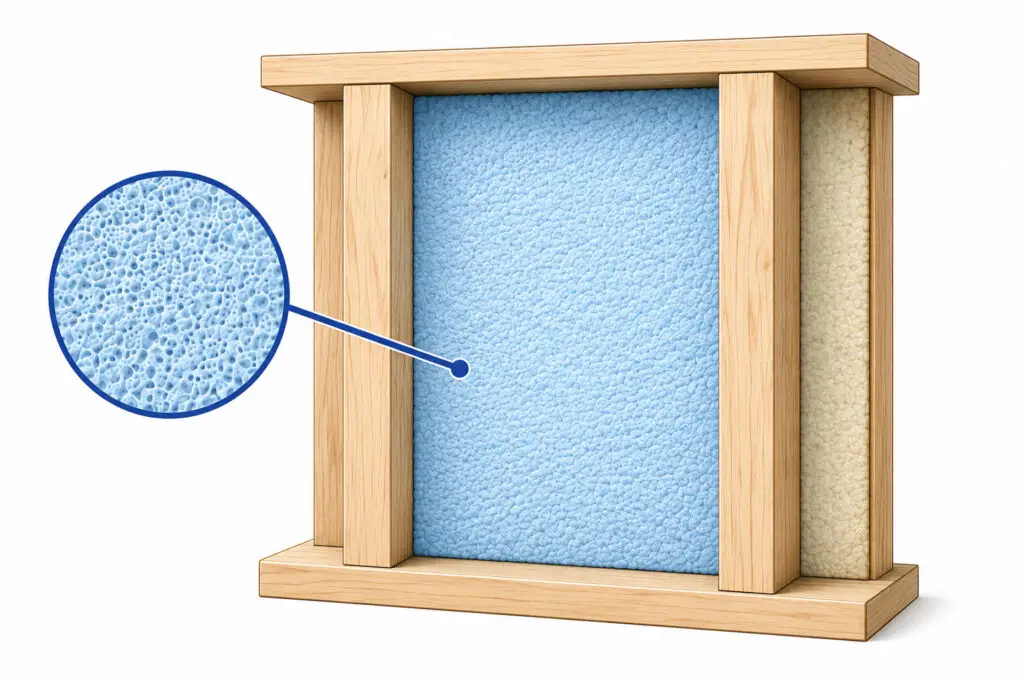
- Dense, rigid foam with a higher insulating value per inch
- Excellent moisture resistance
- Adds structural strength to the assembly
- Commonly used in crawl spaces, rim joists, exterior walls, and other moisture-prone areas
- Typically costs more because it uses more material and has a higher density
What Affects Spray Foam Cost?
Square footage matters. But what you’re insulating usually matters more.
An open attic is very different from a crawl space filled with ductwork, plumbing, and tight spaces and corners. Exterior walls in a remodel are different from walls in new construction before the drywall goes up.
Several things influence the final spray foam insulation cost:
- Total square footage
- Whether open cell or closed cell spray foam is the better fit
- Accessibility of the space
- Whether existing insulation needs to be removed
- Whether air sealing or additional preparation is recommended
That’s why estimates are usually based on the building instead of a flat cost per square foot.
Typical Spray Foam Insulation Costs
Most homeowners ask us for a ballpark number before we even look at the building. That’s understandable.
The ranges below give you a realistic place to start, but they’re only estimates. Two homes with the same square footage can end up with different costs depending on access, prep work, and what we’re actually insulating.
| Project | Typical Cost Range |
|---|---|
| Open cell spray foam | $1.50–$3.00 per square foot |
| Closed cell spray foam | $1.75–$4.50 per square foot |
| General spray foam projects | $1.50–$6.00+ per square foot |
| Typical attic insulation project | Approximately $5,900–$12,000 |
These ranges are useful for planning, but they aren’t guaranteed pricing. Unique layouts, difficult access, or additional preparation can affect the total cost.
Why Existing Insulation Matters
Many Michigan homes already have fiberglass or cellulose in the attic. Sometimes that insulation can stay, and sometimes it shouldn’t.
If the existing insulation has settled, been damaged by moisture, or prevents proper installation, removing it first may be the better long-term approach before installing spray foam insulation.
That additional work affects the overall project cost, but it also allows the new insulation to perform the way it’s intended.
New Construction Usually Costs Less
Installing spray foam insulation is generally easier before the drywall is installed. Wall cavities are open, roof framing is exposed, and installers have full access to the areas being insulated.
Existing homes often require crews to work around finished surfaces, mechanical systems, and limited attic or crawl space access.
Can Spray Foam Lower Energy Bills?
In many cases, yes.
Spray foam insulation creates an air seal that reduces uncontrolled air movement through the building envelope. With fewer air leaks, the heating and cooling system doesn’t have to work as hard to maintain a consistent indoor temperature.
That doesn’t mean every homeowner will see the same reduction in monthly energy bills. Results depend on the home’s age, the condition of the existing insulation, HVAC performance, and where energy loss is occurring.
For many Michigan homeowners, the biggest benefit isn’t just lower energy bills. It’s improved energy efficiency, fewer drafts, and a house that stays at a more consistent temperature. The heating and cooling system doesn’t have to work as hard, which can help reduce heating and cooling costs over time.
Where Spray Foam Makes The Biggest Difference
Spray foam isn’t automatically the right answer everywhere. We usually recommend it where its air sealing ability solves a specific problem instead of trying to use it throughout the entire house.
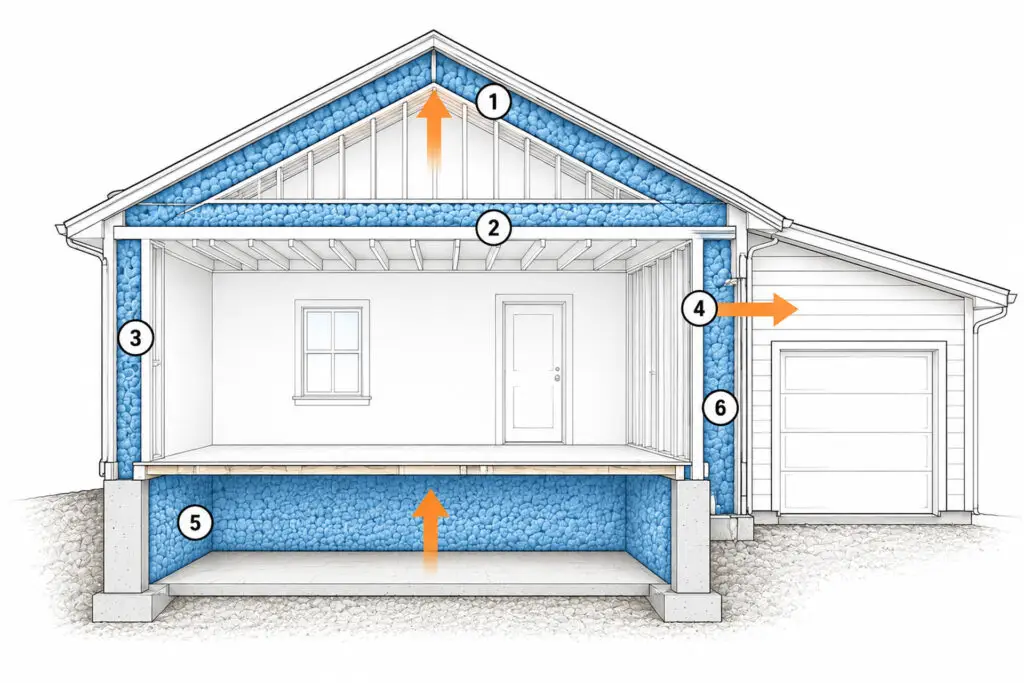
- Roof Deck Creates an insulated roof assembly while reducing heat movement through the roof.
- Attic Improves comfort by combining insulation with air sealing.
- Exterior Walls Often insulated during new construction or open-wall remodels.
- Rim Joists One of the most common sources of air leaks in a home.
- Crawl Space Frequently insulated with closed cell spray foam where moisture resistance matters.
- Garage Wall Helps separate conditioned living space from an attached garage.
Depending on the project, fiberglass insulation, blown-in insulation, cellulose, and other insulation types may still be the more cost effective solution for larger open areas.
Common Cost Questions
How Much Would It Cost To Spray Foam My Entire House?
It depends on how much of the house you’re insulating. Spray foaming an attic and a few problem areas is very different from insulating every exterior wall, roofline, and crawl space. Square footage matters, but so do accessibility, the type of foam, and how much preparation the project requires.
Is Spray Foam Worth It For Smaller Projects?
Sometimes that’s where it delivers the best value. We often install spray foam in areas like rim joists, crawl spaces, or sections of an attic where air leaks are causing the biggest comfort problems. You don’t always have to spray foam the entire house to notice a difference.
Why Do Spray Foam Estimates Vary So Much?
Two homes with the same square footage can receive very different estimates. One attic might be clean and easy to access, while another requires removing old insulation, working around ductwork, or insulating hard-to-reach areas. The building usually determines the price more than the square footage alone.
Why Would Someone Remove Spray Foam?
Most removal projects happen after improper installation, during a major renovation, or because another building issue needs to be addressed. When spray foam is installed correctly in the right location, it’s designed to last for the life of the home.
The Best Way To Estimate Your Project
If you’re trying to estimate spray foam insulation cost for your home, the best place to start isn’t with a price chart. It’s with the building itself.
Looking at the attic, crawl space, walls, or roof assembly tells you much more than square footage alone. Once those areas have been evaluated, it’s much easier to recommend the right insulation, explain what’s driving the cost, and put together an estimate that actually fits the project.
Contact Colony Insulation to schedule a spray foam insulation estimate in Southeast Michigan.