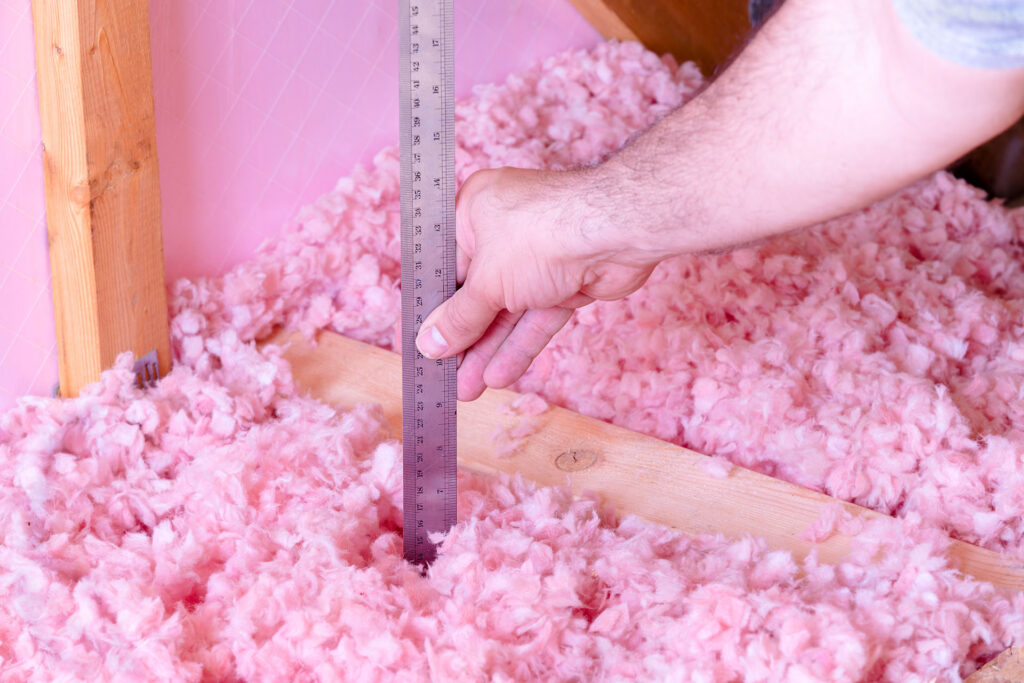
If you’re wondering how much attic insulation you need in Southeast Michigan, you’re not alone. And the answer isn’t simply “more.”
We’ve been in attics that barely had a few inches of old fiberglass left. We’ve also seen homes with plenty of insulation that still felt cold because warm air was leaking through dozens of small openings.
The goal isn’t to pile on as much insulation as possible. The goal is proper attic insulation that matches your home, your climate zone, and the way the attic is built.
Start With The R-Value, Not The Depth
When people ask how much insulation they need, they’re usually talking about inches.
Insulation is actually measured by R-value.
R-value is the way we measure how well insulation resists heat flow. The higher the R value, the better the insulation slows heat flow between your living space and the attic.
For homes throughout Michigan, the recommended attic insulation level is generally R-49 to R-60. Current energy codes commonly require at least R-38 for ceiling insulation, but many homes benefit from higher levels because of our long winter heating season.
Older homes often have current insulation levels closer to R-10 through R-20. That leaves a lot of room for improvement.
Southeast Michigan Has A Cold Climate Zone
Our part of Michigan falls into a colder climate zone than much of the country.
That matters because your attic works hard during both winter and summer.
During cold weather, warm air naturally rises toward the roof. Without proper insulation, that heat escapes through the attic, making your furnace run longer and increasing energy bills.
In the summer, attic temperatures climb well above the outdoor temperature. Good attic insulation helps slow that heat before it reaches your living space, reducing cooling costs and making it easier for your home to stay energy efficient.
More Insulation Isn’t Always The Answer
We hear this almost every week during estimates: homeowners think they simply don’t have enough insulation.
Sometimes they’re right.
Sometimes the bigger problem is air leaks.
Small openings around plumbing pipes, electrical wiring, recessed lights, attic hatches, floor joists, and framing joints allow conditioned air to escape before the insulation ever has a chance to work.
That’s why air sealing usually comes before adding insulation.
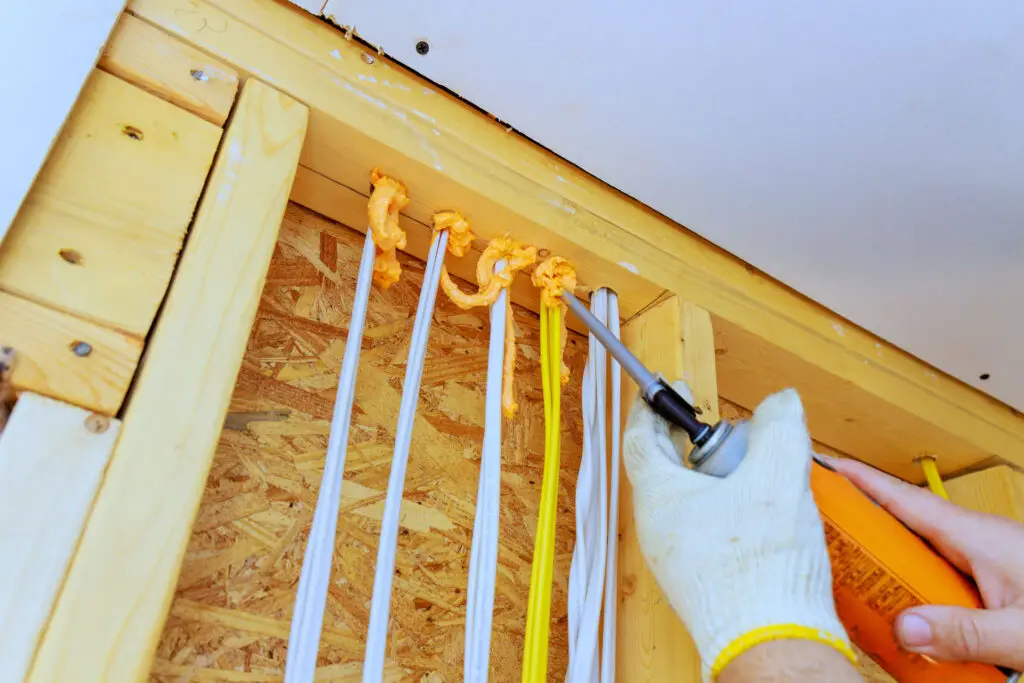
Closing those openings often improves comfort and can also support better indoor air quality, just as much as installing more material on the attic floor.
Existing Insulation Doesn’t Always Need To Come Out
People often assume old insulation has to be removed before installing new attic insulation.
Not always.
If the existing insulation is dry, in good condition, and hasn’t been compressed or contaminated, it can often stay in place while additional blown-in insulation is installed over it.
If it’s wet, badly damaged, or preventing proper air sealing, removal may make more sense.
Every attic is different.
Which Insulation Material Makes Sense?
There isn’t one insulation product that’s right for every home.
The material depends on what we find when we inspect the attic.
| Material | Usually Makes Sense When… |
|---|---|
| Blown-In Cellulose | An existing attic needs more insulation and even coverage. |
| Fiberglass | Wall cavities are open or loose-fill fiberglass is the right fit for the attic. |
| Spray Foam | Air leaks, rim joists, or difficult transitions need to be sealed while insulating. |
Cellulose is one of the most common choices for upgrading existing attics.
It fills irregular spaces well, settles around framing, and helps create consistent coverage across the attic floor. Depending on the product, cellulose generally provides about R-3.2 to R-3.8 per inch. Reaching R-60 often means roughly 16 to 18 inches of cellulose.
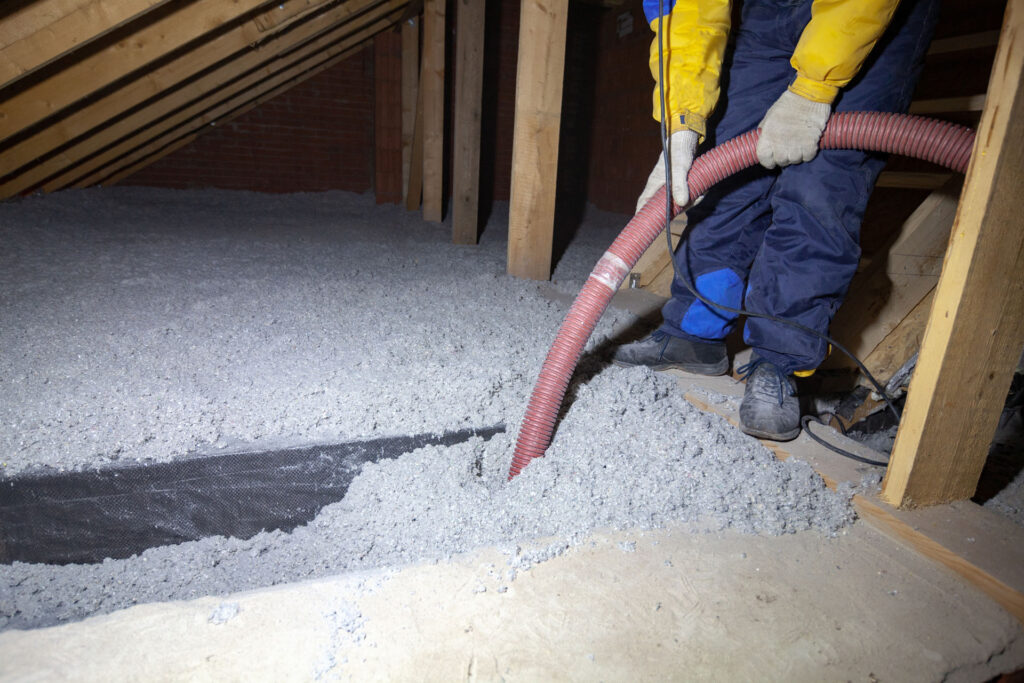
Loose-fill fiberglass works well in many attics, while fiberglass batts are commonly installed in open wall cavities during new construction. Proper installation is what determines performance.
There are situations where spray foam insulation makes more sense than traditional insulation materials.
Spray foam is commonly used around rim joists, difficult transitions, and other attic spaces where air sealing is just as important as insulating.
Because spray foam expands as it’s installed, it fills gaps that other materials can’t, making it one of the most effective ways to seal difficult air leaks.
Open cell foam and closed cell spray foam each serve different purposes.
Closed cell foam has a higher R value per inch, adds rigidity, and resists moisture, making it useful in certain assemblies.
How Much Insulation Does R-60 Actually Require?
This is another common question.
The exact depth depends on the insulation material, but as a general guideline:
- R-49 usually requires about 14 to 16 inches of blown insulation.
- R-60 typically requires about 16 to 18 inches.
- Homes starting around R-10 or R-20 often need a significant upgrade to reach recommended levels.
Looking at the depth alone isn’t enough.
Compressed insulation doesn’t perform as well, and uneven coverage leaves weak spots throughout the attic.
Can You Have Too Much Insulation?
Usually, homeowners don’t have too much insulation.
They have insulation in the wrong place or they have poor air sealing.
Adding insulation without addressing major air leaks can still leave cold rooms, uneven temperatures, an overworked HVAC system, and higher monthly energy bills.
That’s why we evaluate the entire attic assembly, including ventilation, insulation depth, and the condition of the roof deck, before recommending additional work.
If you’re also trying to budget for the project, our guide to attic insulation cost in Southeast Michigan explains what affects pricing.
Four Common Questions We Hear
What Is The Recommended R-Value For Attic Insulation In Michigan?
For most homes across Southeast Michigan, we typically recommend an attic insulation level between R-49 and R-60. R-38 is often the minimum code requirement, but whether that’s enough for your home depends on what we find when we inspect the attic.
What Is The 7 And 7 Rule For Attics?
People ask us about the “7 and 7 Rule” from time to time, but it isn’t something we use when we’re evaluating an attic. We base our recommendations on your climate zone, the existing R value, how the attic is built, and how the house is performing.
Do I Really Need Twenty Bags Of Blown Insulation?
Maybe.
We’ve added that much to some attics, and we’ve used less on others. A 1,000-square-foot attic being upgraded to R-60 with cellulose might take around 20 to 25 bags, but the right amount depends on the attic, the product being installed, and how much insulation is already there.
What Is The 2-3 Rule Of Insulation?
That’s another term we hear online, but it isn’t how we size an insulation project. We look at the attic, measure the existing R value, and figure out how much insulation the house actually needs instead of following a rule of thumb.
Better Comfort Starts With The Right Diagnosis
A comfortable home doesn’t come from chasing the highest R value alone.
It comes from understanding how the building works. That’s basic building science, and it’s why we evaluate the whole attic instead of focusing on insulation alone.
Sometimes the solution is blown-in insulation. Sometimes it’s spray foam insulation around problem areas. Sometimes the biggest improvement comes from air sealing before installing another inch of insulation.
That’s why every recommendation starts with the attic itself instead of a one-size-fits-all answer.
If your attic has never been evaluated, an inspection usually answers the biggest questions pretty quickly. You’ll know how much insulation is already there, where heat is escaping, and whether adding insulation, air sealing, or both makes the most sense.
Contact Colony Insulation to schedule an attic insulation assessment in Southeast Michigan.