If you’re researching attic insulation cost in Southeast Michigan, you’re probably hoping for a simple number.
Two attics with the same square footage can end up with very different estimates. We’ve walked into one attic that only needed a little air sealing and fresh blown-in insulation. We’ve also seen another home the same size where old insulation had to be removed, ventilation corrected, and several major air leaks sealed before any new insulation could be installed.
That’s why the cost isn’t determined by the attic alone. It’s determined by the condition of the building.
A Quick Answer Before We Get Into The Details
Most attic insulation projects in Southeast Michigan fall somewhere between $1.50 and $6.00 per square foot, depending on the insulation material, attic conditions, and the amount of work involved.
Open and closed cell foam insulation usually costs more than blown-in insulation because it insulates while also sealing air leaks.
The final cost depends on:
- Existing insulation
- Attic accessibility
- Air sealing
- Ventilation
- Whether old insulation needs removal
- Choosing the right insulation material
That’s why two houses with identical square footage often receive very different estimates.
Every Estimate Starts With The Attic
People often assume insulation is priced like flooring. Measure the attic, multiply by a price, and you’re done. It rarely works that way.
Before recommending any insulation, we want to understand the attic itself. The size matters, but it isn’t the only factor. Air leaks, existing insulation, ventilation, accessibility, and the condition of the space all influence the final cost.
| What We Look At | Why It Matters |
|---|---|
| Attic Size | Larger attics require more insulation material, but accessibility and layout often affect labor just as much as square footage. |
| Existing Insulation | Some attics only need additional insulation. Others need old insulation removed before new material is installed. |
| Air Leaks | Gaps around wiring, plumbing, recessed lights, and attic access should usually be sealed before adding insulation. |
| Ventilation | Proper airflow through soffit vents and baffles helps prevent moisture problems and ice dams. |
| Accessibility | Wide-open attics are faster to work in than tight spaces filled with ductwork, wiring, pipes, or low roof framing, which can increase labor time. |
Air Sealing Usually Comes Before New Insulation
One thing we see fairly often is someone planning to add more attic insulation without addressing the air leaks underneath it.
Most attic air leaks are small enough to overlook. Together, they can have a much bigger impact than most homeowners expect.
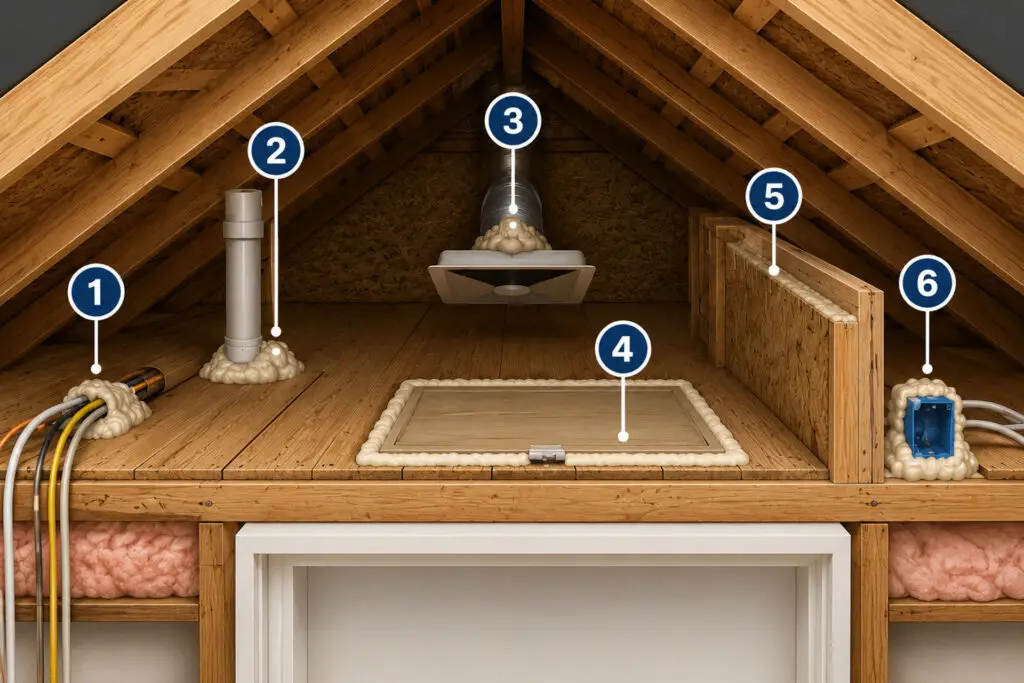
- Wiring Penetrations
Small gaps around electrical wiring allow warm air from the living space to escape into the attic. - Plumbing Pipes
Openings around plumbing stacks are another common source of air leaks and moisture movement. - Bathroom Exhaust Openings
Exhaust fans should vent outdoors. Gaps around the ductwork can allow warm, moist air into the attic. - Attic Access Panel
Unsealed attic hatches and pull-down stairs often leak more conditioned air than homeowners realize. - Top Plates Inside Walls
The framing where interior walls meet the attic floor commonly contains small gaps that should be sealed before adding insulation. - Electrical Boxes
Ceiling-mounted electrical boxes can create hidden air leaks that reduce the effectiveness of attic insulation.
Proper air sealing is often one of the first recommendations we make because it improves energy efficiency, supports better indoor air quality, helps control moisture, and allows new attic insulation to perform the way it’s designed to.
Don’t assume old insulation has to come out.
Sometimes fiberglass or cellulose is still doing its job and simply needs additional coverage. When removal does make sense, it’s usually because moisture, contamination, or previous work has reduced its effectiveness.
Ventilation Still Matters
Proper ventilation is just as important as insulation. Before adding new material, we check soffit vents, baffles, and airflow through the attic. Good ventilation helps control moisture, reduces the risk of mold, and lowers the chance of ice dams during Michigan winters.
How Much Does It Cost To Insulate A 2,000 Square Foot Attic?
Two 2,000-square-foot homes can have very different insulation costs because attic access, air leaks, existing insulation, roof framing, and ventilation all affect the estimate.
If the attic already has a good base of insulation and only needs additional blown-in insulation, the cost will usually be much lower than a project requiring extensive air sealing, insulation removal, and spray foam insulation.
How Much Does Attic Insulation Cost In Michigan?
Most homeowners don’t need to memorize R-values.
We simply want enough insulation for Michigan’s climate. Current recommendations generally fall between R-49 and R-60, depending on the attic and the home’s existing insulation.
What About Utility Rebates?
Depending on the project, Michigan homeowners may qualify for insulation incentives through Consumers Energy, DTE, or federal tax credits. Since programs change over time, it’s worth checking current eligibility before starting a project.
Will New Attic Insulation Lower Energy Bills?
It often can.
A properly insulated attic often reduces heat loss during winter while slowing heat gain during summer. That allows the HVAC system to maintain a more consistent indoor temperature. How much you save depends on the condition of the house, existing insulation, air leakage, and the work being completed.
Choosing The Right Insulation Material
Fiberglass, cellulose, and spray foam each solve different problems. Air leakage, ventilation, existing insulation, and the way the attic is built all influence the recommendation.
| Material | Usually A Good Fit When… | Keep In Mind |
|---|---|---|
| Fiberglass | The attic already has good air sealing, the project is new construction, or the existing insulation simply needs more depth. | Fiberglass performs well when air movement is controlled. In older attics with significant air leaks, it may not perform as well until those leaks are sealed. |
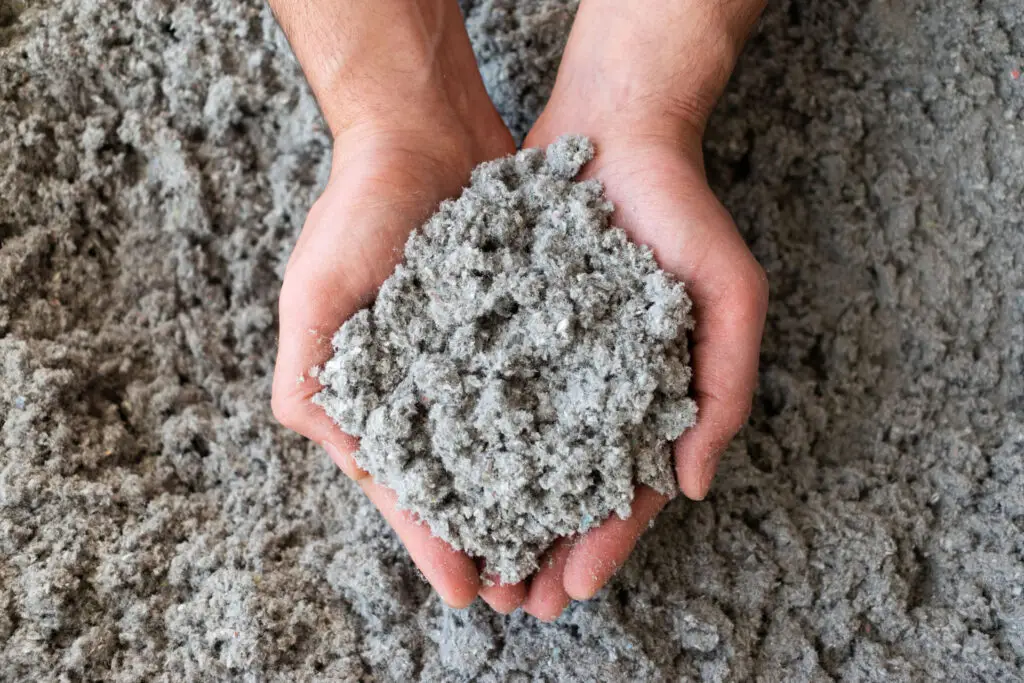
| Cellulose | Upgrading older homes, improving uneven attic insulation, or filling small gaps throughout the attic. | Made from recycled materials and settles into small voids better than fiberglass, making it a common choice for retrofit projects. |
| Spray Foam | Rim joists, rooflines, hard-to-insulate spaces, or areas where air leakage is the biggest concern. | Costs more upfront but combines insulation and air sealing in one application. Open cell foam and closed cell spray foam are used in different situations. |
We recommend what fits the building instead of assuming every attic needs the same solution.
Roof Deck Or Attic Floor?
Not every attic is insulated the same way. Some homes are insulated on the attic floor. Others are insulated along the roof deck.
If the attic is vented and isn’t intended to become conditioned living space, insulating the attic floor is usually the practical solution.
If the attic is being brought inside the conditioned envelope or contains mechanical equipment that benefits from a controlled environment, insulating the roof deck with spray foam insulation may make more sense.
Roof Deck Vs. Attic Floor
| Attic Floor Insulation | Roof Deck Insulation |
|---|---|
| Common in vented attics | Common in conditioned attics |
| Blown-in fiberglass or cellulose are common choices | Spray foam is commonly used |
| Keeps heat inside the living space | Brings the attic inside the home’s thermal envelope |
| Often the more cost-effective approach | Often chosen for specific performance goals or building designs |
The location of the insulation changes how the attic performs, which is why we evaluate the space before recommending a material.
What Would We Probably Recommend?
If someone asked us to recommend insulation without looking at the attic, we’d probably say no.
We’d rather see the building first.
| Situation | Typical Recommendation |
|---|---|
| Older home with little insulation | Air sealing followed by blown-in cellulose or fiberglass |
| New construction | Insulation selected based on the wall assembly, roof design, and performance goals |
| Drafty bonus room | Targeted spray foam or injection foam combined with additional attic insulation where needed |
| Whole-house comfort problems | Evaluate the building first before assuming the attic is the only issue |
The recommendation always starts with the building, heat flow, and energy savings rather than the insulation product.
Looking Beyond The Initial Cost
The price matters, but so does the work being recommended.
An attic that’s properly air sealed, ventilated, and insulated is usually more comfortable and more energy efficient than one that simply has more insulation added.
If you’re trying to understand what affects attic insulation cost in Southeast Michigan, the best place to start is with the attic itself. The goal isn’t to install more insulation than you need. It’s to recommend the right solution for the way your house is built.
Contact Colony Insulation to schedule an attic insulation estimate in Southeast Michigan.