
Danny was professional and did an exceptional job.
I could not be more pleased with the results.
Colony Insulation installs attic insulation for homes and buildings in Clay and surrounding Southeast Michigan areas. We look at air leaks, existing insulation, attic ventilation, and the right insulation material before we recommend what to install.

Fill out the form below to get started on your project today!

Attic insulation is supposed to slow heat loss in winter, reduce heat buildup in summer, and help keep the house more stable from room to room. In a lot of homes, the attic is one of the first places requiring insulation attention because the attic floor sits right above the ceiling drywall, and that is where conditioned air escapes fast when the space is under insulated.
Danny was professional and did an exceptional job.
I could not be more pleased with the results.
The foam is sprayed flawlessly.
Danny did an excellent job, and I would recommend Colony for spray foam insulation work.
Clean, quick, professional, and on time.
Danny answered all of my questions with confidence and did excellent work. One of the best installers I have seen.
My first floor struggled to make it above 60 degrees—now it’s 72 degrees and the floors are nice and warm.
Danny and his partner did an awesome job encapsulating my crawl space. They cleaned it out thoroughly, and the finished work exceeded my expectations.
Completed everything exactly as promised.
Colony Insulation was able to insulate our attic just one day after we signed the contract. The work was great, and they left the space neat and clean.
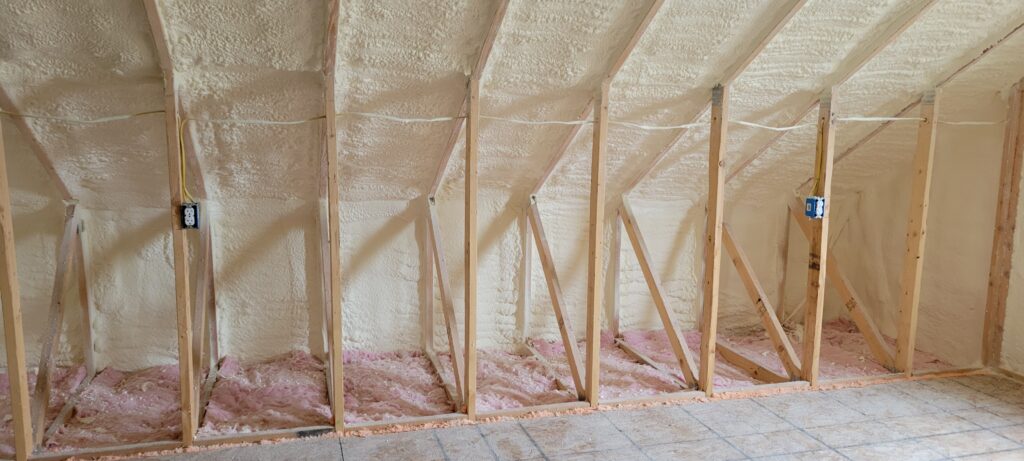
There is no single type of insulation that fits every attic. Some jobs call for fiberglass batt insulation, some need loose fill insulation or blown insulation, and some need spray foam or foam board in specific areas. The right choice depends on access, attic hatches, floor joists, air ducts, unfinished walls, venting, and how much insulation is already there.

Ira Township
Fort Gratiot
China Township
See how Colony Insulation can help bring your property higher energy efficiency and comfort.
A lot of under insulated attics show the same pattern. The second floor gets too hot in summer, too cold in winter, and the HVAC system runs harder than it should. Some people assume the problem is old windows, but the attic can be just as big a reason a house loses heat and gains heat.
Another common sign is when the insulation level sits low between joists and the attic floor is still visible across large sections. You may also notice cold rooms, uneven ceiling temperatures, drafty spots around attic hatches, or higher utility bills without any other clear change.
Before installing insulation, we look at the attic as a system. That includes how air moves, where heat is escaping, and whether more insulation alone will fix it.
One of the most common questions is how much insulation an attic should have. That comes down to insulation r value, the current r value already in place, how the attic is built, and how much heat the house is losing through the top. The answer is not just to pile in more insulation and hope for the best.
We check the existing insulation, measure depth with a tape measure when needed, and compare the assembly to the target insulation r value for this climate. Energy Star guidance is a useful reference point, but the real job is matching the r value to the attic layout, the insulation material, and the condition of the space.
Higher r value helps, but r value alone does not solve attic problems if air is still moving freely through the ceiling plane. Warm air from the house can escape through recessed can lights, attic hatches, plumbing penetrations, and gaps around electrical boxes. That is why air sealing needs to be part of the plan, not an afterthought.
In many attics, the sequence matters. First we seal air leaks. Then we install insulation or add insulation to reach the right insulation r value. If the attic is leaking air badly, more insulation without air sealing can leave performance on the table.
The best attic insulation job is usually built around the attic itself, not around one favorite product. Colony Insulation handles multiple materials, which makes it easier to recommend the right fit instead of forcing the same type of insulation into every house or building.
Fiberglass batt insulation is a common option when the attic floor is open and accessible. Batts can be laid between joists and over the attic floor in a controlled way, and fiberglass is familiar to a lot of homeowners for a reason. It is cost-conscious, widely used, and effective when installed correctly.
Batt work still needs care. Gaps, compression, and poor fitting around framing reduce performance. Kraft paper facing may be part of the assembly depending on the application, but that is not something to guess at. We look at the existing build-up, the ceiling, and whether a vapor barrier question is actually relevant before we install anything.
Homeowners also ask about Owens Corning because Owens Corning fiberglass insulation is one of the names they already know. Brand familiarity is fine, but the better question is whether batt insulation is the right insulation material for that attic and whether the target r value is being met.
Loose fill insulation is a strong option when the attic has irregular framing, pipes, wiring, or other details that make batts slower to fit well. Blown insulation can cover an attic floor more evenly and fill around obstructions without leaving the same kind of voids you see with poorly placed batts.
This approach can work especially well when a house needs more insulation over a broad attic area. Cellulose and fiberglass are both used in blown applications. When we recommend loose fill insulation, we are looking at the square footage, target r value, the existing insulation condition, and how cleanly the material can be installed without blocking vents.
Spray foam makes sense when air sealing is a major part of the problem, or when the attic layout creates hard-to-seal transitions. Foam insulation can reduce air movement while also adding thermal performance. In the right setting, that combination is valuable.
There are different kinds of foam. Open cell and closed cell spray foam behave differently, and the right choice depends on the use case. Closed cell foam is denser and brings a higher r value per inch. Open cell foam expands more and is used differently. If foam is the right move, we explain why. If it is not, we say that too.
Spray foam is also where people tend to assume the biggest claim wins. That is not how we look at it. Foam is one tool. Fiberglass insulation, cellulose, batts, and other materials still make sense in plenty of attics.
Some attics need attention in smaller sections, not just across the full attic floor. Foam board can be useful at attic hatches, access doors, rim details, and select transition points where rigid coverage helps. In tight gaps, expanding foam may be used to seal problem areas before new insulation goes in.
This is also where material choice matters more than people expect. New insulation does not always need to be the same type as the existing insulation. Sometimes the right move is combining materials so the details are sealed properly and the larger field area is insulated efficiently.
People hear that they need more insulation, and sometimes that is true. But more insulation is not the whole answer when the attic still has open air leaks, blocked soffit vents, disconnected vent paths, or old insulation that has settled, shifted, or taken on moisture.
If the attic is vented, we need to preserve venting. That means keeping soffit vents open, maintaining airflow to ridge vents, and not burying the edges where outside air is supposed to move through the attic correctly. If the attic has problem areas around can lights, attic hatches, or air ducts, those need to be addressed before adding insulation blindly.
Air sealing is one of the most practical parts of attic work. If you do not seal air leaks first, warm air keeps escaping into the attic in winter and hot attic air keeps affecting the house in summer. That loss adds up.
We check common leakage points and seal air leaks where the attic and living space connect. That includes penetrations in the ceiling plane, attic access points, and areas where framing leaves hidden gaps. Once that is done, adding insulation tends to do what it is supposed to do.
Moisture changes the job. Wet or compacted insulation does not perform the same way. If old material looks matted down, dirty, or has a spongy texture, we need to understand why before more insulation goes over it.
Ventilation matters here too. A vented attic needs airflow. A different roof or attic design may call for a different insulation approach. A radiant barrier may come up in conversation because people read about it online, but radiant barrier discussions are usually more relevant in hot climates than they are in Southeast Michigan. Around here, attic insulation, air sealing, and the right r value usually matter more.
The attic is not isolated from the rest of the building. Poor attic insulation can affect comfort in walls, floors, and rooms below, and it can make heating systems and air conditioning work longer than they should. That is one reason attic problems often show up as whole-house problems.
In a house, the top of the building is where a lot of heat tries to escape. In some commercial spaces, the roof and attic area play the same role. That is why attic insulation is often one of the most direct ways to improve comfort and reduce wasted energy without overcomplicating the solution.
Colony Insulation handles residential and commercial insulation work, including attic insulation for retrofit jobs and new construction. Some projects involve topping off an older attic that is under insulated. Others involve installing insulation in a new build where the attic and ceiling assembly are still being completed.
The process changes with the job. In older homes, we may be working around existing insulation, older framing, attic hatches, and ceiling drywall details. In new construction, the question is usually how to insulate the attic correctly from the start so the building performs the way it should.
Cost depends on the insulation material, the square footage, how easy the attic is to access, and what prep work is needed before installation starts. A simple attic floor top-off is not priced the same as a job that needs air sealing, foam at detail areas, or a full change in insulation strategy.
Material choice changes cost too. Fiberglass, cellulose, batts, loose fill insulation, spray foam, and foam board all install differently. The best value usually comes from matching the material and method to the attic, not from chasing the cheapest number on paper.
People also ask about do it yourself attic insulation because store-bought materials look simple enough. The problem is that a DIY approach often misses the hard part. The hard part is not just laying batts or blowing fill. It is getting the air sealing, venting, coverage depth, and safety details right around lights, ducts, and access points. That difference matters.
Colony Insulation is an insulation contractor serving Clay and surrounding Southeast Michigan areas with attic insulation, air sealing, spray foam, blown insulation, fiberglass insulation, and related work. The company handles both residential and commercial projects, and the public-facing brand stays focused on comfort, efficiency, and getting the right solution installed correctly.
The company is owner-led by Daniel Walker, and the public-facing material presents the installers as certified and insured. Just as important, the job is approached in a practical way. The attic gets looked at first. The problem gets defined clearly. Then the right material gets installed.
Some homeowners come in asking for Owens Corning batts. Others ask for spray foam because they want the highest r value they can get. Others just know the upstairs is uncomfortable and want it fixed. All of those conversations can lead somewhere useful, but the recommendation still has to fit the attic. There is no shortcut around that.

Get A Clear Plan For Your Attic
If your attic feels under insulated, Colony Insulation can look at the space, explain what is going on, and recommend the right way to insulate it. You do not need a sales pitch. You need a clear answer and solid installation.